Storm Eunice: 14 dead, millions left without power across Europe
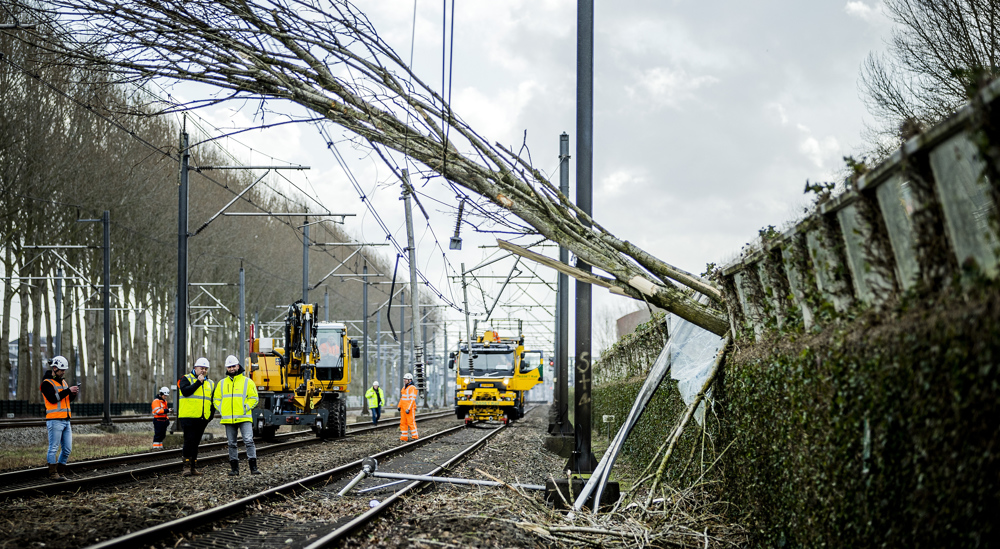
Storm Eunice kept battering northwestern Europe on Saturday, killing 14 people and leaving more than one million homes and businesses without electricity.
The victims were hit by falling trees, flying debris and high winds in Britain, Ireland, the Netherlands, Belgium, Germany and Poland on Saturday, according to emergency services.
Police confirmed the deaths, saying that the latest fatality happened in the Belgian city of Ghent.
The victim, a 37-year-old man, was hit in the head by a flyaway solar panel, and died of his injuries.
Authorities put London on its first ever "red" weather warning on Friday, meaning there was "danger to life."
The highest weather alerts have been declared across southern England, South Wales and the Netherlands.
Eunice is the second storm in a week for the UK after Storm Dudley battered parts of Scotland, northern England and Northern Ireland Wednesday. Some 226,000 homes and businesses remained without power across the UK.

In the Netherlands, the train network was paralyzed, with no Eurostar and Thalys international services running from Britain and France after damage to overhead power lines.
France was also grappling with rail disruption and power cuts, as were Ireland and Germany.
According to German rail operator Deutsche Bahn, "more than 1,000 kilometers" of track had suffered damage.
Poland still had 1.1 million customers without electricity on Saturday afternoon, officials said, after the country's northwest took a battering.
Polish Prime Minister Mateusz Morawiecki issued an appeal for people to stay home. "I appeal to you: please stay at home!" he wrote on a Facebook post. "We are constantly monitoring the situation and the appropriate services are at work. The fire brigade has already intervened more than 12,000 times."
Scientists have warned about a deadly weather phenomenon known as a sting jet, which made the 1987 Great Storm so destructive and deadly.
Eighteen people were killed in that storm and 15 million trees were blown down in winds.
A sting jet is a very narrow and concentrated blast of powerful, upper-level winds that can form inside powerful weather systems.
Scientists are also looking into any link between human-made climate change and Storm Eunice. The Met Office, weather forecasts for the UK, believes there could be.
Michael Dukes, a forecaster at MetDesk said that "climate models do indicate an increase in these type of storms as the earth continues to slowly warm."
"So this is very much in line with what climate scientists have been warning us about for a number of years now," Dukes said.

Pope Leo says Venezuela must remain an independent country

Dozens killed, over 100 injured in fire at Swiss ski resort bar

Putin reaffirms Russia’s resolve to win Western-backed war in Ukraine



VIDEO | Press TV's news headlines
Hamas: Israel escalating ceasefire violations in Gaza
Venezuela's government declares unwavering unity behind Maduro
VIDEO | Global outcry over Venezuela president abduction
Iran keeps wheat import subsidies despite cutting other food supports
Venezuelan military stands with acting president after US kidnapping of Maduro
VIDEO | Press TV's news headlines
VIDEO | Protesters in Toronto slam US kidnapping of Venezuelan president


 PressTV NEWSLETTER
now
PressTV NEWSLETTER
now

 This makes it easy to access the Press TV website
